
laat een bericht achter
Als u interesse heeft in onze producten en meer wilt weten, laat dan hier een bericht achter. We zullen zo snel mogelijk reageren.




De beste aankoop die ik deze winter heb gedaan! De kleur en het breiwerk zijn prachtig en hij zit heerlijk! Ik ben van New York naar Miami gereisd zonder hem ook maar één keer uit te doen. Echt superleuk!!
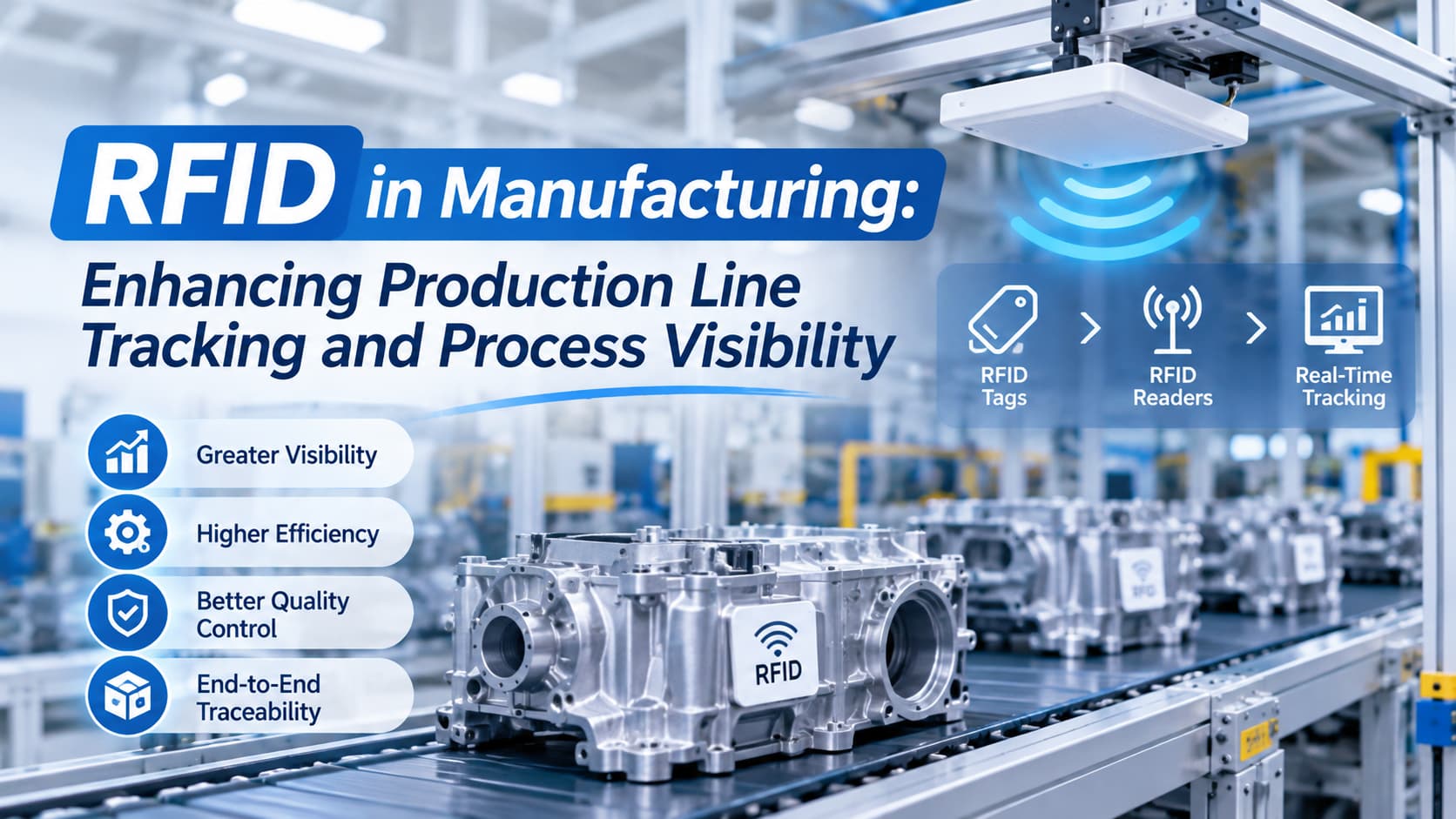
In modern manufacturing, production efficiency, product quality, and supply chain visibility are essential factors for maintaining competitiveness. As manufacturing processes become increasingly complex, companies need better ways to monitor materials, track work-in-progress (WIP), and manage production activities in real time. Traditional tracking methods, such as manual records and barcode scanning, can no longer fully meet the requirements of highly automated production environments.
RFID (Radio Frequency Identification) technology provides an effective solution for production line tracking. By attaching RFID tags to raw materials, workpieces, production containers, tools, or finished products, manufacturers can automatically identify and monitor items as they move through different production stages.
Unlike traditional barcode systems, RFID does not generally require direct line-of-sight scanning. Multiple RFID tags can be identified simultaneously, helping reduce manual operations and improve data collection efficiency.
With RFID readers, antennas, and production management software working together, manufacturers can build a more transparent production tracking system, improve process control, and achieve better coordination between production equipment and management systems.
RFID production line tracking refers to the use of radio frequency identification technology to monitor the movement and processing status of products throughout the manufacturing process.
An RFID tracking system typically consists of three main components: RFID tags, RFID readers, and a data management platform.
RFID tags are attached to products, workpieces, pallets, or production carriers. Each tag contains a unique identification number that links to product information stored in the manufacturing execution system (MES) or another management database.
RFID readers are installed at important production checkpoints, such as material entry points, assembly stations, testing areas, and packaging lines. When tagged items pass through these locations, the readers automatically collect identification information and transmit it to the connected system.
The management platform processes the collected data and updates the production status of each item.
For example, when a component enters an assembly station, an RFID reader identifies its tag and records the arrival time, production line, and processing stage. After assembly is completed, another reader records the next production event.
Through this process, manufacturers can obtain continuous visibility into product movement without relying entirely on manual scanning or paper-based records.
RFID technology can be integrated into different stages of a production line to create an automated tracking process.
Step 1: RFID Tag Assignment
Before production begins, each product, workpiece, or production carrier is assigned an RFID tag. The tag stores a unique identification number associated with relevant product information, such as the model, batch number, order number, and production requirements.
Depending on the application, manufacturers can choose RFID labels, industrial RFID tags, or specialized tags designed for metal surfaces and high-temperature environments.
Step 2: Automatic Identification at Production Stations
RFID readers and antennas are installed at designated positions along the production line. When tagged objects enter the reading area, the system automatically identifies them and captures their information.
For UHF RFID applications, readers can identify multiple tags within their effective reading zones, making them suitable for production environments where materials and products move continuously.
Step 3: Production Data Collection
After identifying an RFID tag, the system records relevant production information, including the processing station, arrival time, operation status, and production sequence.
This information can be transmitted to an MES, ERP, or other manufacturing management platform through the system interface.
Step 4: Real-Time Production Status Updates
The management system associates each RFID identification event with the corresponding production order and updates the item's current status.
Managers can check which production stage an item has reached, whether it has passed quality inspection, and whether any production delays have occurred.
Step 5: Product History and Traceability
Once production is completed, the collected RFID data provides a record of the product's manufacturing journey.
If a quality problem occurs, manufacturers can use the recorded information to trace the relevant production batch, processing station, and associated manufacturing records.
RFID production tracking can support various manufacturing operations. Its value is particularly clear in environments where products pass through multiple processing stages.
Work-in-progress management is one of the most important applications of RFID in manufacturing.
During production, semi-finished products may move between different workstations, assembly areas, and temporary storage locations. Without an effective tracking system, manufacturers may struggle to determine the exact location and processing status of each item.
By attaching RFID tags to workpieces or production carriers, companies can automatically record product movement at designated checkpoints.
This allows production managers to monitor WIP quantities, identify bottlenecks, and understand where products are waiting for the next operation.
Manufacturing efficiency depends heavily on the timely availability of raw materials and components.
RFID can help manufacturers track materials from warehouse receiving to production line delivery. When tagged materials enter or leave designated areas, RFID readers automatically capture their identification information.
This improves material visibility and helps production teams confirm whether the correct components have arrived at the required workstation.
It also reduces the risk of material shortages, misplaced components, and unnecessary inventory accumulation.
In complex assembly operations, products may require multiple components and specific assembly sequences.
RFID tags can be used to identify workpieces and associate them with their corresponding production instructions.
When a product reaches an assembly station, the system retrieves its relevant information and checks whether the required operation has been completed.
If an incorrect component is detected or a required process has been skipped, the system can trigger an alert or prevent the next operation, depending on the equipment and software integration.
This helps manufacturers improve process consistency and reduce assembly errors.
Quality control is another important area where RFID can provide value.
RFID readers can identify products before or after inspection and connect them with testing records. The management system can record whether a product has passed inspection, failed testing, or requires rework.
For example, products that have not completed the required inspection process can be flagged before entering the packaging stage.
This creates a more reliable connection between production activities and quality management.
After manufacturing is completed, RFID technology can continue tracking finished products as they enter storage, packaging, and outbound logistics operations.
RFID readers installed at warehouse entrances or shipping areas can identify tagged products and automatically update inventory records.
This improves coordination between production, warehousing, and distribution departments while providing better visibility into finished product movements.
Implementing RFID technology can bring several operational benefits to manufacturing companies.
Improved Production Visibility
RFID provides automatic identification at designated production checkpoints. Managers can access updated production information and better understand the movement of materials and products throughout the manufacturing process.
Reduced Manual Operations
Traditional tracking methods often require workers to scan barcodes or manually enter production information. RFID reduces these repetitive tasks by automatically collecting identification data, allowing employees to focus on more valuable production activities.
Higher Inventory Accuracy
By tracking raw materials, WIP, and finished products, RFID helps reduce discrepancies between physical inventory and system records. More accurate data supports better material planning and production scheduling.
Improved Production Efficiency
Automatic identification makes it easier to monitor product movement and identify delays between production stages. Managers can use this information to optimize workflows, reduce unnecessary waiting time, and improve resource utilization.
Better Quality Traceability
RFID identification numbers can be linked to production records, inspection results, and batch information. When quality issues occur, manufacturers can locate relevant records more efficiently and identify the source of potential problems.
Reduced Human Errors
Automated data collection reduces the possibility of incorrect manual entries, missed scans, and product identification mistakes. This is particularly valuable in high-volume manufacturing environments.
The performance of an RFID production tracking system depends not only on software but also on the selection and installation of appropriate RFID hardware.
Manufacturers should consider several important factors when designing an RFID solution.
Frequency Selection
UHF RFID is commonly used for production line tracking because it offers relatively long reading distances and supports multiple-tag identification. HF RFID may be more suitable for applications requiring close-range identification or specific reader-to-tag interaction.
Reader and Antenna Configuration
Fixed RFID readers are suitable for continuous identification at production checkpoints, while integrated RFID readers can provide a more compact installation option.
Antenna selection is equally important. Directional antennas can help control reading areas, while circularly polarized antennas can improve tag detection when tag orientation varies.
Tag Selection
Different production environments require different RFID tag designs.
For example, metal surfaces may interfere with standard RFID tags, so on-metal RFID tags should be considered when tracking metal components or equipment. High-temperature production processes may require specially designed industrial tags.
Reading Accuracy and Interference Control
Production lines often contain metal machinery, electronic equipment, and moving materials. These factors may affect RFID signal performance.
Therefore, manufacturers should conduct on-site testing to determine the optimal reader positions, antenna angles, output power, and tag placement.
System Integration
An RFID system should work effectively with existing MES, ERP, WMS, and production control systems.
A well-designed solution allows identification data to flow between hardware and management software, creating a connected production information environment.
Although RFID offers significant advantages, manufacturers should also consider potential implementation challenges.
Metal surfaces and liquids can affect radio frequency communication, especially in UHF RFID applications. Improper antenna installation may also cause unwanted tag reads or missed identifications.
In addition, production environments may require specialized tags that can withstand heat, vibration, dust, moisture, or chemical exposure.
Another important consideration is system integration. RFID hardware alone cannot provide complete production visibility. The collected information must be correctly connected to production orders, manufacturing processes, and business management systems.
To achieve reliable results, manufacturers should evaluate their production workflows, select suitable RFID equipment, and conduct practical testing before large-scale deployment.
RFID technology is transforming production line tracking by making manufacturing processes more visible, automated, and data-driven.
From raw material management and WIP tracking to assembly monitoring, quality inspection, and finished product traceability, RFID provides manufacturers with an effective way to collect production information automatically.
Compared with traditional manual tracking methods, RFID can reduce repetitive operations, improve inventory accuracy, and help businesses identify production problems more quickly.
For manufacturers looking to build smarter factories and improve production efficiency, integrating UHF RFID readers, antennas, and industrial RFID tags into production lines is a valuable step toward digital manufacturing.
As smart manufacturing continues to develop, RFID will play an increasingly important role in connecting physical production activities with digital management systems.

Gedetailleerde informatie en PDF

Contact via e-mail voor ondersteuning.

Professionele technische begeleiding.

Contact via e-mail voor ondersteuning.



LINK

YouTube

laat een bericht achter
Scan de scan naar WeChat/WhatsApp :



 IPv6 NETWERKONDERSTEUNING